
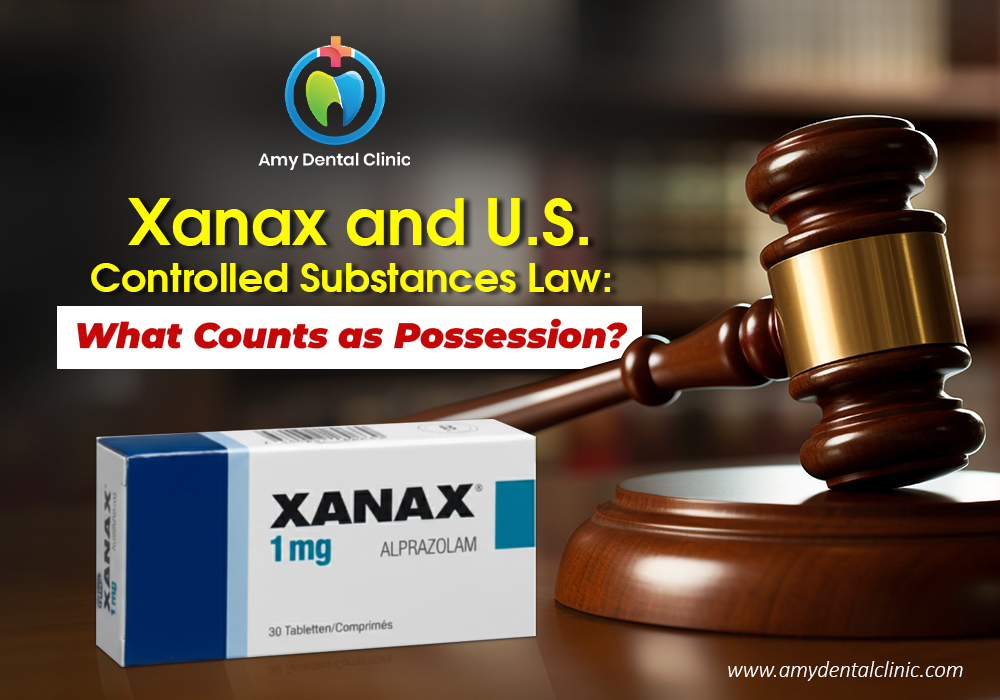
Possession of Xanax without a prescription is considered a federal offense due to its classification as a Schedule IV controlled substance. This classification indicates that xanax has recognised medical use but also carries the potential for abuse, which can lead to psychological or physical dependence.
The fact that counts as possession involved consuming xanax for personal use without a valid prescription. For the misuse of the medicine and becoming addicted to it.
About Schedule IV Drugs
Schedule IV drugs are also substances or chemicals that are defined as drugs with a low potential for abuse and low risk of dependence. Some examples of schedule IV drugs are Xanax, Soma, Ativan, Ambien, Tramadol, Valium, Darvocet, Darvon, and Talwin.
Xanax Controlled Substance Schedule
Xanax is a drug that is used to treat anxiety and panic disorders. According to the Xanax Controlled Substances Act, this medicine is a Schedule IV medication, which means it is:
- Accepted medical use
- Lower abuse potential than Schedule II/III
- Regulated and tracked still
- Requires a valid prescription
- This ranges from prescription monitoring to imposing legal penalties
What counts Xanax as possession?
The fact that Xanax is counted as possession is mentioned below:
Legally, possession includes:
Actual Possession
You have the drug upon your person (in or on your body):
- Bag
- Purse
- Wallet
- Hand
Constructive Possession
You have control of the space where the drug is found:
- Car
- Bedroom
- The backpack you left in a common space
- Locker
Constructive possession does not demand the medication to be on oneself.
Legal Possession
You are in legal possession if:
- The Xanax was prescribed to you
- The prescription is valid
- The pills remain in their original pharmacy container, or you can reasonably prove they’re yours
- The dosage and quantity reflect your pharmacy records.
Illegal Possession
- Possession is illegal if:
- The drug is not indicated for you.
- The name on the prescription bottle is not yours.
- The pills come in an unmarked container, and you cannot prove ownership.
- The label is removed or changed.
- You have more than your allotment
- You purchased Xanax online without a valid U.S. prescription
- The source is non-pharmaceutical (street Xanax, counterfeit tablets, etc.)
- Penalties vary by state but can include:
- Misdemeanor or felony charges
- Fines
- Probation
- Compulsory treatment programs
- Criminal record affecting employment or housing
Xanax prescription requirements USA
Because alprazolam is controlled, U.S. prescribers must follow strict rules. The requirements are:
- Legitimate medical purpose
- Thorough assessment of symptoms
- Medical history review
- Assessment of risk for misuse
- Review of Prescription Drug Monitoring Program (PDMP) data
- Proper identity verification for telehealth
How to Get a Xanax Prescription Legally
To legally receive Xanax:
- See a US-licensed doctor, nurse practitioner, or physician assistant
- Undergo an evaluation
- Provide actual, correct medical and mental history
- Treatment options, including those other than benzodiazepines
- And then get medicine
Most of the illegally purchased Xanax is fake and even contains fentanyl.
Telehealth Xanax Rules USA
Telehealth rules about controlled substances have changed over time. Common requirements include: A video appointment in real time, Identity verification, Compliance with DEA guidelines, and Limits on first-time controlled substance prescribing. Some telehealth platforms do not prescribe benzodiazepines specifically due to misuse risk.
What Is Xanax?
Xanax belongs to the benzodiazepine class, which is commonly used to treat anxiety disorders. Knowing what is Xanax can help people understand why such medications are controlled. Its active ingredient, alprazolam, is a central nervous system depressant that works by enhancing GABA, a calming neurotransmitter. It is the brand name of alprazolam. Medicine, public safety, and U.S. drug policy meet at an interesting juncture. It is one of the most prescribed medications for anxiety and panic disorder, and at the same time, it is one of the most regulated. Since Xanax is considered a Schedule IV controlled substance, individuals should know not only what the medication does but also how possession laws affect them.
Xanax Uses
Common medical xanax uses include:
- Generalized anxiety disorder (GAD)
- Panic disorder with or without agoraphobia
- Short-term treatment of severe anxiety
- Anxiety-related insomnia (off-label in some cases)
Because it acts rapidly, it is sometimes used in crises where fast calming is called for.
How Xanax Works
Xanax enhances the effect of GABA-A receptors in the brain, thus slowing down nerve activity. Consequently, this causes:
- Anxiety reduction
- Sedation
- Muscle relaxation
- Panic symptoms reduced
It starts to take effect very fast; hence, most people experience immediate relief during panic attacks.
Xanax vs other benzodiazepines and short acting vs long acting benzos
Xanax has a short half-life, and its effects start to wear off more quickly. This medicine can be more prone to withdrawal symptoms or interdose anxiety than longer-acting benzodiazepines. Let us gain more knowledge about xanax by comparing it with other medicines.
Xanax vs Valium
Comparing Xanax and Valium, we know that both are benzodiazepines, which are drugs that are used to treat anxiety symptoms. Particularly, xanax is ideal for panic attacks because it has a quicker onset and shorter duration than valium, which has a longer half-life and provides more prolonged relief.
Xanax vs Klonopin
Now, let us see how Xanax differs from Klonopin. These two medicines also fall in the benzodiazepine class of medications, which is also used to treat anxiety symptoms and panic disorders. All they differ in is their duration and onset of action. Xanax is mostly prescribed for short durations and provides rapid action. Whereas Klonopin is a longer-acting drug that is suitable for treating chronic illness. It is also used for preventing seizures because it provides more consistent and long-lasting relief.
Alprazolam vs Xanax
Let us also learn about the comparison between Alprazolam and xanax. Both medicines also fall under the class group of benzodiazepines, which are mainly used to treat anxiety and panic disorders. Alprazolam is the generic name, and xanax is the brand name for alprazolam; this is the only difference between them.
Xanax vs Ativan
Talking about Xanax vs ativan, they both also fall under the strong benzodiazepines and are used to treat anxiety. They both primarily differ in how long they last and how soon they start their action to work. Xanax acts faster and for a shorter period of time. Whereas ativan has a slightly slower onset but a longer duration.
Short acting vs long acting benzos:
Lastly, we will be seeing the difference between short acting vs long acting benzos. So, these short-acting drugs work quickly but for a shorter duration, which makes this medicine helpful for acute relief. Whereas long-acting drugs have a slower onset but provide long-lasting relief for chronic conditions.
Xanax dosage information
Prescribers tailor xanax dosage information based on patient needs, and typical ranges may include:
- Initial anxiety dose: often 0.25 mg–0.5 mg three times daily
- Panic disorder: wider range; sometimes extended-release (XR) formulations are used
Because dosage misuse is associated with legal and medical risks, patients must follow prescribed instructions exactly.
Xanax Side Effects
Xanax, when taken in the wrong manner, or when someone is allergic to benzodiazepines, or has taken xanax without any guidance and without any prescription, can lead to Xanax side effects. So the side effects that occur when taking Xanax under the above-mentioned conditions are listed below:
Common side effects include:
- Drowsiness
- Slowed reaction times
- Memory problems
- Co-ordination Problems
- Emotional blunting
- Slurred speech
Longer-term xanax side effects are:
- Tolerance
- Dependence
- Insomnia
- Hallucinations
- Severe cravings
- Overactive reflexes
- Agitation
- Shakiness
- Seizures
Serious xanax side effects
- Impaired motor
- Cognitive function
- Risk of abuse
- Misuse
- Dependence
- Withdrawal reactions
Xanax Interactions
Xanax can interact with various drugs. Additionally, it may conflict with several foods and vitamins. So it’s helpful to recognize that different combinations can have different consequences. For example, certain interactions may affect the drug’s dose and effectiveness. Xanax-condition interactions can also induce specific symptoms. For information about the encounters, see the details below:
- Due to xanax interactions, patients shouldn’t consume alcohol or other sedatives while on Xanax
- Understanding how xanax interacts is important for safety.
- Alcohol (hazardous, combined depressant effect), when consumed while taking xanax, may risk your life and can be considered dangerous for living.
- Opioids with xanax can lead to a high risk of overdose
- Sleep medications, i.e., zolpidem, eszopiclone, etc., should not be taken together with Xanax, as it can lead to serious side effects.
- Antidepressants may interfere with metabolism
- Some antifungals and antibiotics act upon liver processing.
The FDA warns strongly against combining benzodiazepines with opioids due to the fatal respiratory depression.
Is Xanax addictive?
Yes, despite being Schedule IV (lower risk than Schedule II drugs like oxycodone), Xanax can be addictive because of:
- Rapid onset
- Strong sedative effect
- Short duration, which results in repeated dosing
Signs of Xanax Dependence
In short, let us learn about the signs of xanax dependence:
- Craving for the drug
- Taking more than prescribed
- Using Xanax for stress not related to medical directions
Xanax Withdrawal Symptoms
Without medical supervision, Xanax withdrawal symptoms can be complex and even dangerous. It is severe and medically dangerous, and the symptoms include
- Rebound anxiety
- Panic attacks
- Sweating
- Tremors
- insomnia
- Mood swings
- Seizures (severe withdrawal)
Xanax should never be stopped abruptly after long-term use. A supervised gradual reduction is essential for this medicine.
Xanax Overdose Symptoms
Xanax overdose symptoms are exponentially enhanced with alcohol or opioids. Overdoses happen when you become addicted to a particular drug, and so do the symptoms, which are mentioned below:
- Extreme somnolence
- Confusion
- Impaired coordination
- Slowed breathing
- Loss of consciousness
- Coma in severe cases
Who Should Not Take Xanax
Xanax is not recommended for:
- Xanax pregnancy risks: benzodiazepines can increase risks such as preterm birth, birth defects (rare but documented), neonatal withdrawal syndrome, and floppy infant syndrome. Pregnant individuals or those planning pregnancy should consult a clinician about alternatives.
- Can you take xanax with alcohol? No. This combination is one of the most dangerous because both substances depress the central nervous system. Effects can multiply, leading to blackouts, overdose, or respiratory arrest.
- Individuals with serious liver disease should not take Xanax
- Those with an addiction history
- People suffering from respiratory disorders
Xanax Precautions
Patients who have a history of asthma or other respiratory conditions, kidney or liver impairment, depression, suicidal thoughts, alcoholism, elevated blood pressure, taking other medications, allergies, the elderly, children, pregnancy, or lactation should be treated with caution.
- It may impair concentration and coordination.
- While taking this medication, you should not drive or operate any dangerous machinery.
- Refrain from drinking alcohol.
- While taking this medication, avoid eating grapes or drinking grape juice.
Legal Alternatives to Xanax
Clinicians can consider the following for those who are unable to take benzodiazepines or prefer a non-controlled medication option. So the legal alternatives to xanax are:
- SSRIs include sertraline and escitalopram.
- SNRIs
- Buspirone (nonsedating anti-anxiety)
- Hydroxyzine (antihistamine with anxiolytic effects)
- Beta-blockers (for performance anxiety)
- Cognitive Behavioral Therapy (CBT)
- Mindfulness-based therapies
- Lifestyle interventions
These options eliminate legal restrictions and risks of dependence associated with Xanax.
Also
Is It Illegal to Buy Xanax Online in the U.S.? What Federal Law Says
Conclusion
Xanax is a powerful medication with both strong legitimate medical benefits and serious legal and health considerations. In the United States, it is against the law to possess Xanax outside of a valid prescription, and its misuse comes with significant risks. Understanding how xanax works, its risks and interactions, and what counts as legal possession enables patients to protect their health, comply with the law, and make informed decisions regarding their treatment.